
Pip: Bulgaria just elected its first woman president, and somehow the most clarifying commentary came from sociologists on Facebook — which, honestly, tracks.
Mara: This episode covers posts from drivesafe on the presidential results, what they mean for Rumen Radev's political standing, and whether fears about NATO and EU membership actually hold up to scrutiny.
Pip: Let's start with the vote itself and what the numbers tell us about power.
Presidential Politics And Power
Mara: The question here is whether Yotova's win is a genuine mandate or just the sum of Gyurov's mistakes — and what it means for Radev going forward.
Pip: Journalist Kalina Paskaleva put it bluntly about the televised debate on BNT: "The debate between Yotova and Gyurov was extremely weak and he fell apart. Without attacking me that he was polite and prepared — he was nervous and she ate him alive. That's it."
Mara: The upshot is that Yotova's 57.68 percent in the runoff wasn't just a coalition win — it reflected a real performance gap. Gyurov's campaign started too late and never reached the voters it needed.
Pip: Paskaleva is pointed about who those voters are — older Bulgarians watching the evening news, not TikTok, which is a structural problem no late-stage campaign fix was going to solve.
Mara: And Paskaleva is equally firm that the result shouldn't be read as a parliamentary scoreboard. Presidential elections, she argues, follow a different logic entirely — one disconnected from the hundreds of millions in state contracts that drive local and parliamentary races.
Pip: The sharper question she leaves open is whether Radev, who gains a real credit of trust from this outcome, will use it — or repeat what she calls an old street saying about schemes that work well not being dismantled.
Mara: That credit of trust, and the responsibility it carries, is exactly where the next post picks up.
NATO And EU Alignment
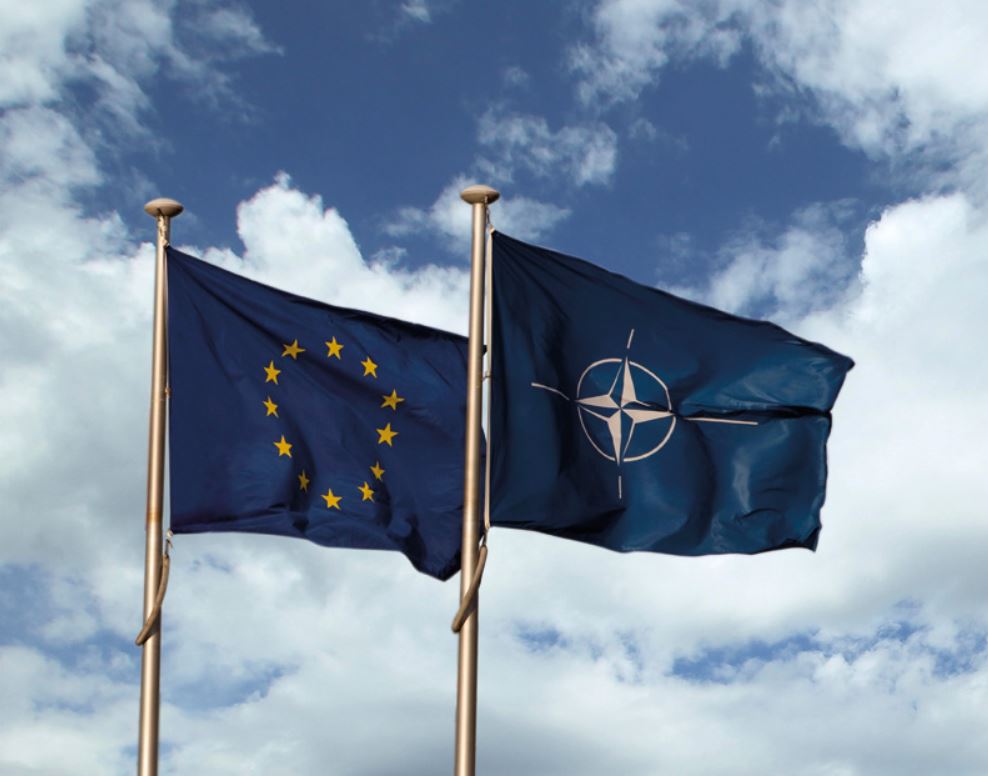
Mara: The deeper anxiety after any election in this region is always geopolitical — so the question this segment addresses is whether the result actually threatens Bulgaria's place in NATO and the EU.
Pip: Sociologist Aleksey Pamporov answers that directly, and the title of the post is essentially the argument: "Neither Radev nor Yotova intend to take us out of NATO and the EU — not because they are good and pure, but because there is profit in that arrangement."
Mara: The plain-language version: membership isn't a values commitment, it's an incentive structure. That framing deflates the alarm without dismissing the concern.
Pip: Which is a more useful sentence than most of what apparently ran on television after the vote.
Mara: Pamporov reserves his sharpest criticism for how the losing side explained its loss. His core argument is that the parliamentary result — where Progressivna Bulgaria took 44.6 percent and 131 seats — reflected not love for Radev but accumulated frustration with the opposition's behavior and its lack of self-criticism.
Pip: He names the language itself as part of the problem: "You cannot be angry about being called a 'grantaji' and then call others 'kopeyki'; you cannot consider yourselves elves while calling the others orcs."
Mara: That symmetry argument runs through the whole post. On international conflicts — Ukraine, Iran, Venezuela, Gaza — he makes the same point: principles applied selectively to friends and enemies aren't principles.
Pip: And he closes with a historical warning that lands harder than most post-election commentary: the same scale of responsibility that turned Ivan Kostov and Petar Stoyanov into, as he puts it, political corpses now sits with the winners.
Mara: "Their responsibility now is double and enormous" is how he ends it — which is less a reassurance than a countdown.
Pip: So: a historic presidential result, a credit of trust that comes with a very visible expiration date, and a sociologist reminding everyone that the real test is what happens next.
Mara: The accountability question doesn't go away after the votes are counted. We'll be watching how that responsibility gets used.


Leave a Reply